If you've been researching AI agents and keep seeing both names, here's the short answer to the OpenClaw vs Claude question: they aren't competitors, and you don't have to pick one over the other. OpenClaw is an open-source agent framework you run yourself. Claude is a cloud large language model (LLM) built by Anthropic. OpenClaw is the system that plans, calls tools, and gets work done; Claude is one of the "brains" OpenClaw can plug into when you want cloud-grade reasoning. Understanding the split makes it much easier to decide where each one fits in your setup.
This guide breaks down what each one actually is, why they're complementary rather than rival products, and how to think about running them together on your own hardware.
What OpenClaw Actually Is
OpenClaw is an open-source agent framework. Think of it as the orchestration layer: it manages conversations, holds context and memory, connects to tools and APIs, runs skills, and executes multi-step tasks on your behalf. You self-host it, which means it runs on a machine you control rather than on someone else's servers.
Because OpenClaw is the framework and not the model, it isn't locked to any single AI provider. It can route requests to a local model running on your own device, or it can hand the hard reasoning off to a cloud provider when you ask it to. That flexibility is the whole point: you decide where the work happens.
What OpenClaw does not do is replace the language model itself. It needs a model to think with. That model can live locally on your hardware, or it can be a cloud service like Claude. Which brings us to the other half of the comparison.
What Claude Is
Claude is a family of large language models made by Anthropic, delivered as a cloud service through an API. When you send Claude a prompt, your request travels to Anthropic's servers, the model generates a response, and it comes back to you. It's known for strong reasoning, long context windows, and careful, well-structured output.
Claude is a model, not a framework. On its own it answers prompts and uses tools you define, but it doesn't self-host, manage your local files, or run continuously on a box in your office. To turn Claude into an always-on agent that does real work in your environment, you need an orchestration layer around it. OpenClaw is exactly that kind of layer.
So the honest framing of OpenClaw vs Claude is less "which is better" and more "which job are we talking about." One is the agent system. The other is a cloud brain that system can borrow.
OpenClaw vs Claude: How They Work Together
Here's where it clicks. OpenClaw can use Claude as an optional cloud provider. You run OpenClaw locally, and for tasks that benefit from heavy cloud reasoning, you point it at Claude's API. For everyday tasks, you can keep things on a local model so they stay on your hardware.
This is what we mean by local-first with optional cloud. Routine work, private documents, and quick tasks can run on the model living on your own device. When a job calls for the extra horsepower of a frontier cloud model, OpenClaw can route that single request to Claude and bring the answer back. You're not forced into an all-cloud or all-local setup — you choose per task.
That hybrid approach is the practical reason the OpenClaw vs Claude debate is the wrong question. The useful setup uses both: OpenClaw as the guide that runs the show, Claude as one capable option on the menu of brains it can call.
When to Use Each
You're the one driving here, so it helps to match the tool to the moment:
- Reach for local-first (OpenClaw on your own hardware) when privacy matters, you want predictable behavior, you're doing high-volume or always-on tasks, or you simply want the work to stay on a machine you own. Home automation, personal assistants, document handling, and tinkering all fit here.
- Reach for Claude (cloud) when a task needs the strongest possible reasoning, a very long context window, or capabilities your local model can't match yet. Complex analysis, nuanced writing, and tricky multi-step planning are good candidates.
- Use both together when you want the best of each: OpenClaw orchestrating locally, quietly handing the heavy thinking to Claude only when it's worth it. This is the sweet spot for most people who want control and capability.
The good news is you don't have to commit up front. With OpenClaw as your framework, switching or mixing providers is a configuration choice, not a rebuild.
Where ClawBox Fits
Self-hosting OpenClaw sounds great until you hit the setup: choosing hardware, flashing an OS, installing dependencies, and tuning it all to run an AI agent reliably. That's the part that stops a lot of people before they start.
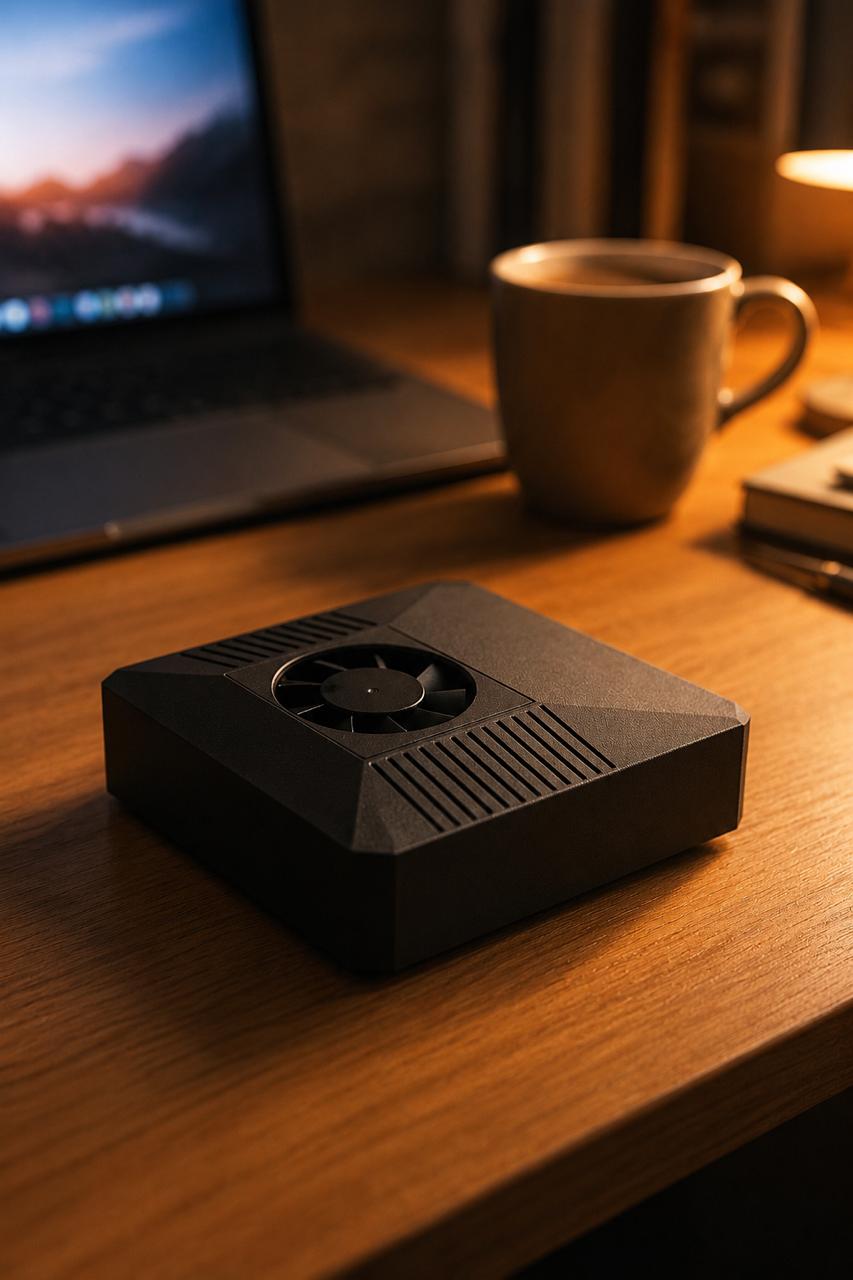
ClawBox is built to remove that friction. It's a plug-and-play AI hardware box with OpenClaw pre-installed, so you skip the assembly and go straight to using your agent. Under the hood it runs an NVIDIA Jetson Orin Nano Super 8GB with 512GB NVMe storage, delivering roughly 67 TOPS of AI performance at about 20W of power draw. It's a one-time purchase at €549, and it's local-first with optional cloud — your everyday work can run on the box, and you can point it at a cloud provider like Claude whenever a task calls for it.
In other words, ClawBox gives you the OpenClaw side of the equation ready to go, while keeping the door open to Claude on demand. If you want to see how the hardware is built for this, the OpenClaw on Jetson page and our local AI hardware overview both go deeper, and the private AI page explains the keep-it-on-your-hardware angle.
FAQ
Is OpenClaw a replacement for Claude? No. OpenClaw is an agent framework that orchestrates tasks and tools; Claude is a cloud LLM that does the reasoning. OpenClaw needs a model to think with, and Claude can be one of those models. They're complementary.
Do I need a Claude subscription to use OpenClaw? No. OpenClaw is local-first and can run on a model hosted on your own hardware. Claude is an optional cloud provider you can add when a task benefits from it — you choose per task, not all-or-nothing.
Can ClawBox use Claude? Yes. ClawBox ships with OpenClaw pre-installed and runs local-first, and you can point it at optional cloud providers like Claude when you want extra cloud reasoning for a specific job.
The Bottom Line
The OpenClaw vs Claude comparison resolves into a simple idea: OpenClaw is the self-hosted framework that runs your agent, and Claude is one optional cloud brain it can borrow. Use local-first for privacy and everyday work, lean on Claude when a task demands frontier reasoning, and combine them when you want both. You stay in control of where the work happens.
If you'd rather skip the setup and start with a box that already has OpenClaw ready to run — local-first, with Claude and other cloud providers as an option — take a look at ClawBox. You can also compare the best hardware for self-hosted agents or browse the docs to see how it all fits together.